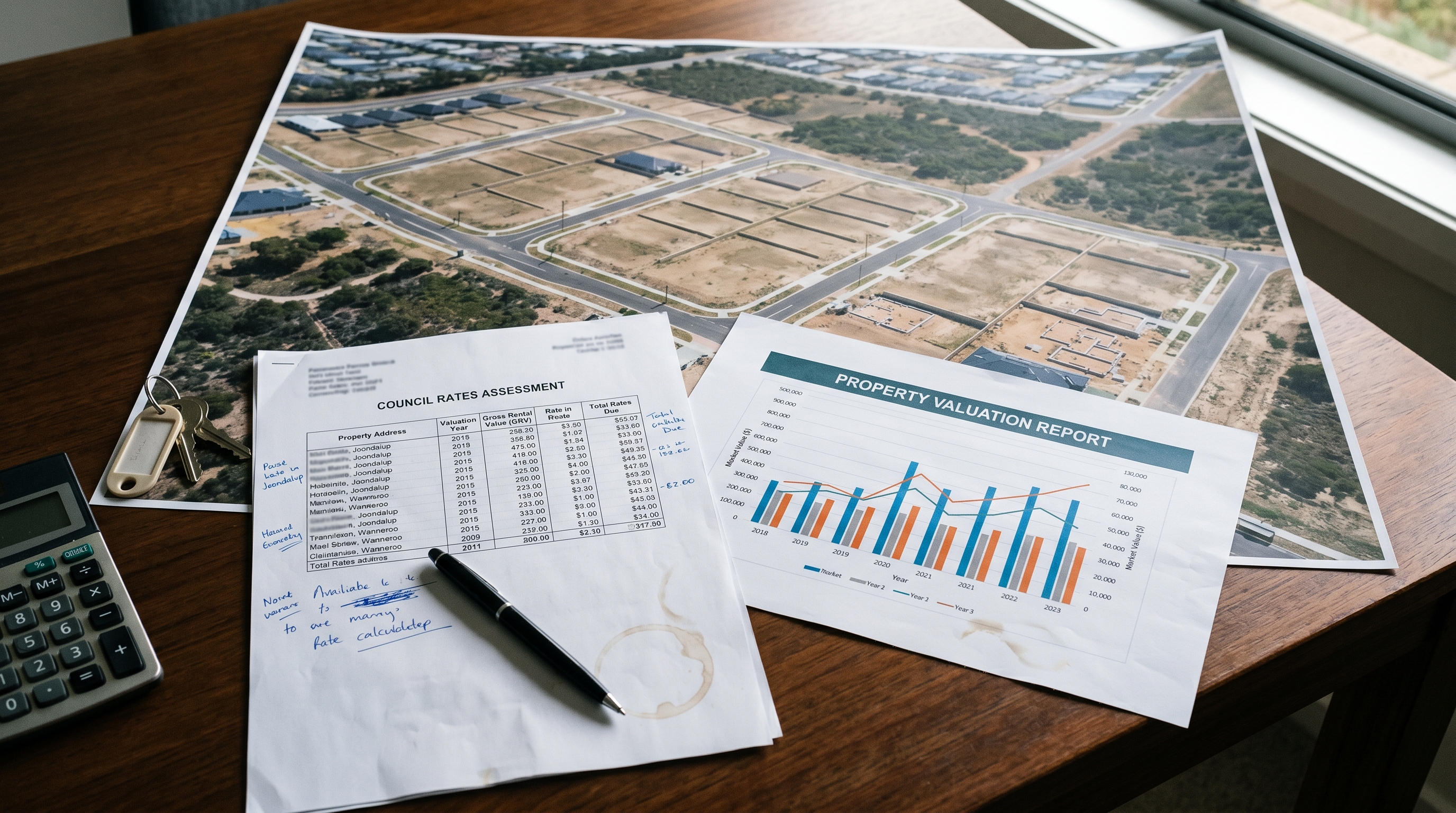
Several local governments in Western Australia are shifting towards using Gross Rental Value (GRV) as the primary method for calculating property rates. This change, documented in recent WA Government Gazettes, affects property owners in the City of Wanneroo, the City of Kwinana, the City of Swan, and the Shire of Serpentine Jarrahdale. The move to GRV could significantly impact the amount of rates paid by individual property owners and businesses, prompting questions about transparency and fairness in local government finance. GovScanner investigates.
The GRV Transition: A Closer Look
The WA Government Gazette, a crucial source of official notices, reveals a pattern of local governments formally adopting GRV for rating purposes. Multiple entries specifically state that the respective council will use GRV as "the basis for a rate in respect of the land". For example, the City of Wanneroo, in a notice published on February 25, 2026, declared its intention to use GRV for specific land parcels. Similar notices appear for the City of Kwinana concerning Lots on Deposited Plan 429780, the City of Swan under Section 6.28(1) of relevant legislation, and the Shire of Serpentine Jarrahdale. These entries, accessible via /gazette, demonstrate a coordinated, or at least parallel, shift towards GRV across several key local government areas.
It is important to understand what Gross Rental Value (GRV) signifies. GRV represents the potential annual rent a property could reasonably achieve if it were available for lease. This contrasts with other valuation methods that might consider factors like property size, construction costs, or recent sales data. The shift to GRV means that rates will be more directly tied to the perceived rental income potential of a property, rather than its inherent value. This can lead to significant fluctuations in rates, particularly in areas with high rental demand.
Want to follow this thread yourself? Search GovScanner's free dashboard, or connect GovScanner to your favourite AI so your model can explore WA government data for you.
Cross-reference with [Information on how GRV is calculated and its implications for property owners (e.g., Landgate website)] for a deeper understanding of GRV calculations.
Implications for Property Owners
The transition to GRV has potentially wide-ranging implications for property owners. Those who own properties with a high rental yield, or those located in areas with strong rental markets, may see their rates increase. Conversely, properties with lower rental potential might experience a decrease. However, the overall impact will depend on the specific rating policies adopted by each local government, including the rate in the dollar applied to the GRV. It's crucial for property owners to understand how their individual rates are calculated and how the GRV transition will affect them.
Local government websites for affected councils, like the City of Wanneroo and the City of Swan, should provide detailed information on the changes and the reasons behind them. See [Local government websites for affected councils to get specific details on the changes and reasons].
Furthermore, the shift to GRV could influence investment decisions in the property market. Investors may be more attracted to properties with strong rental returns, while owner-occupiers might prioritise properties with lower rental potential to minimise their rates burden. This could lead to shifts in property values and demand in different areas.
Scrutiny and Transparency
Given the potential impact on property owners, it's essential that local governments are transparent about the reasons for adopting GRV and the methodologies used to calculate it. Ratepayers have a right to understand how their rates are determined and to hold their elected officials accountable for their decisions. It is also reasonable to ask whether alternative rating models were considered and what modelling was undertaken to understand the impact on ratepayers.
This shift also begs the question of consistency across local governments. While each council has the autonomy to set its own rating policies, discrepancies in valuation methods or rate-setting practices could lead to unfairness and inequities. Ratepayers in one area might pay significantly more or less than those in another area with similar properties, simply because of the differing approaches taken by their respective councils.
Previous GovScanner reporting on local government rate changes is available at [Previous reporting on local government rate changes].
The Role of State Government
While local governments have the primary responsibility for setting rates, the State Government plays a crucial oversight role. It sets the legislative framework within which councils operate and has the power to intervene if necessary to ensure fairness and equity. Premier Roger Cook's Labor Government, with a majority in both houses of Parliament, has the capacity to address any systemic issues that may arise from the GRV transition.
Members of Parliament may also raise questions about the GRV transition during parliamentary debates. GovScanner's /hansard section provides access to transcripts of these debates, allowing citizens to stay informed about the issues being discussed and the positions taken by their elected representatives. Questions on Notice can also be used by MPs to seek specific information from the government about the GRV transition and its potential impacts. These questions and responses are available at /questions. You can also track the performance of individual MPs at /rankings and learn more about them at /members/[slug].
The move to GRV represents a significant shift in local government finance in Western Australia. While it may offer some advantages in terms of aligning rates with rental potential, it also presents challenges in terms of transparency, fairness, and potential impacts on property owners. As these changes roll out across multiple councils, it will be crucial for property owners to stay informed, engage with their local governments, and hold their elected officials accountable. The WA government must also ensure that the transition is managed fairly and equitably, with adequate safeguards in place to protect the interests of ratepayers.
Never miss a planning scheme change. Set up free alerts at govscanner.com.au